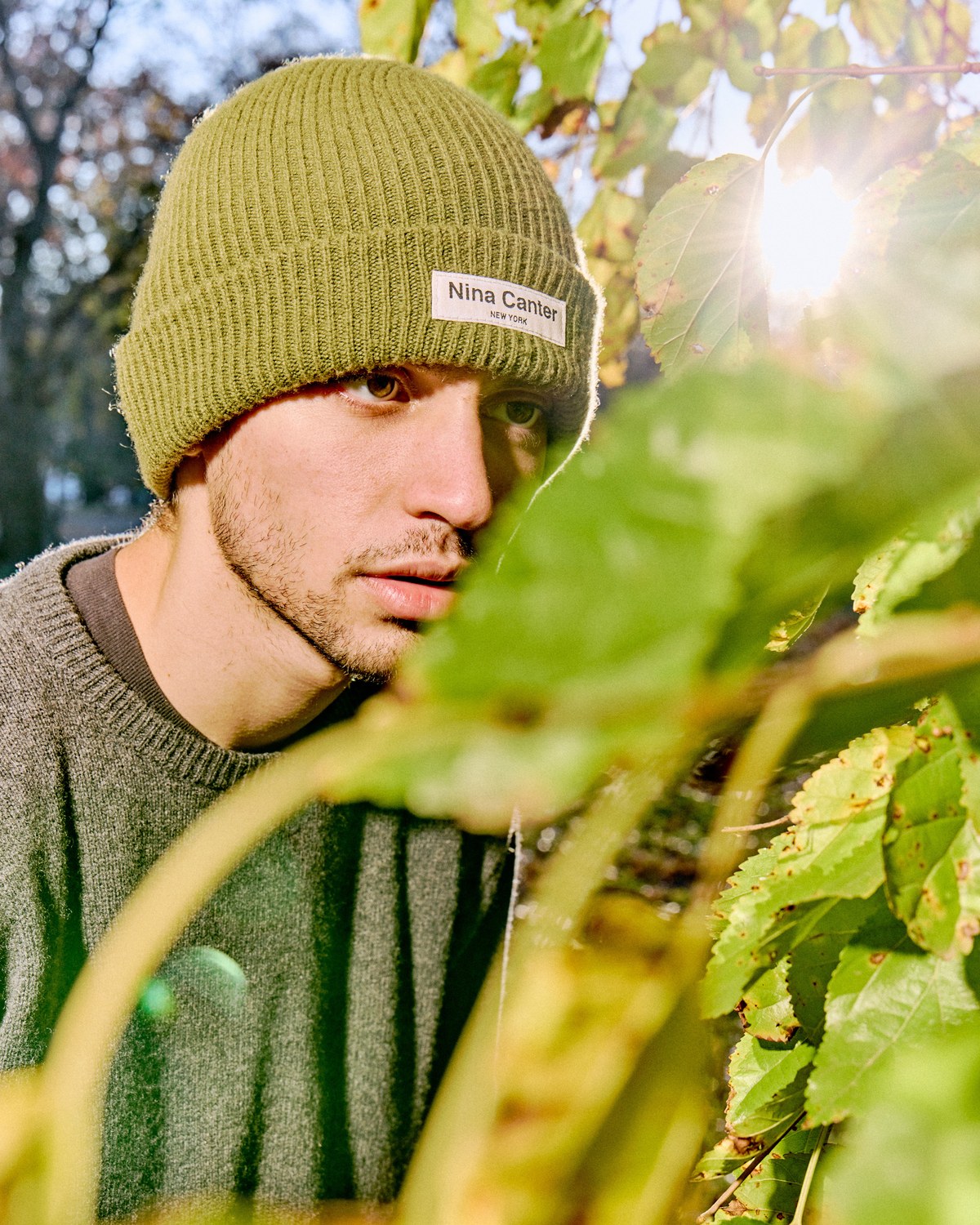
Splat Paint‑Out
Sometimes a paint-out shot can feel almost impossible, but a lot more just became possible. A manual 3D camera track helps train a Gaussian splat model directly from the footage. Roughly mask out the subject, and if the camera caught a glimpse of what's behind them, it's automatically patched in.
On this shot there was no view of what was behind the paint-out subject, but this method still greatly reduced the distraction and preserved certain details that can be a nightmare for VFX: layers of reflective, transparent, warped surfaces.
Sim to Sound
A chain simulation setup left over from a jewelry commercial got me wondering what else Houdini's physics could drive. Every collision can be exported as a CSV with data like frame, impact force, which links collided, and more, so I spent an afternoon building an interface to turn that raw data into music.

Houdini only tracks impacts per frame, so I interpolate sub-frame notes ordered by chain link position and jitter them for texture. Impact force drives MIDI velocity, run through a bezier curve and log compression filter to tame the range. Preview it live in the tool, then export as MIDI and play with it in Ableton.
Album Sequencer
A client's art project called for fifteen five-hour videos, each one scored by a different album stretched, chopped, and rearranged to fill the runtime. He wanted the songs evenly dispersed, and short interludes added between each one. At that scale, doing it by hand wasn't realistic, so I built a tool to handle it procedurally.
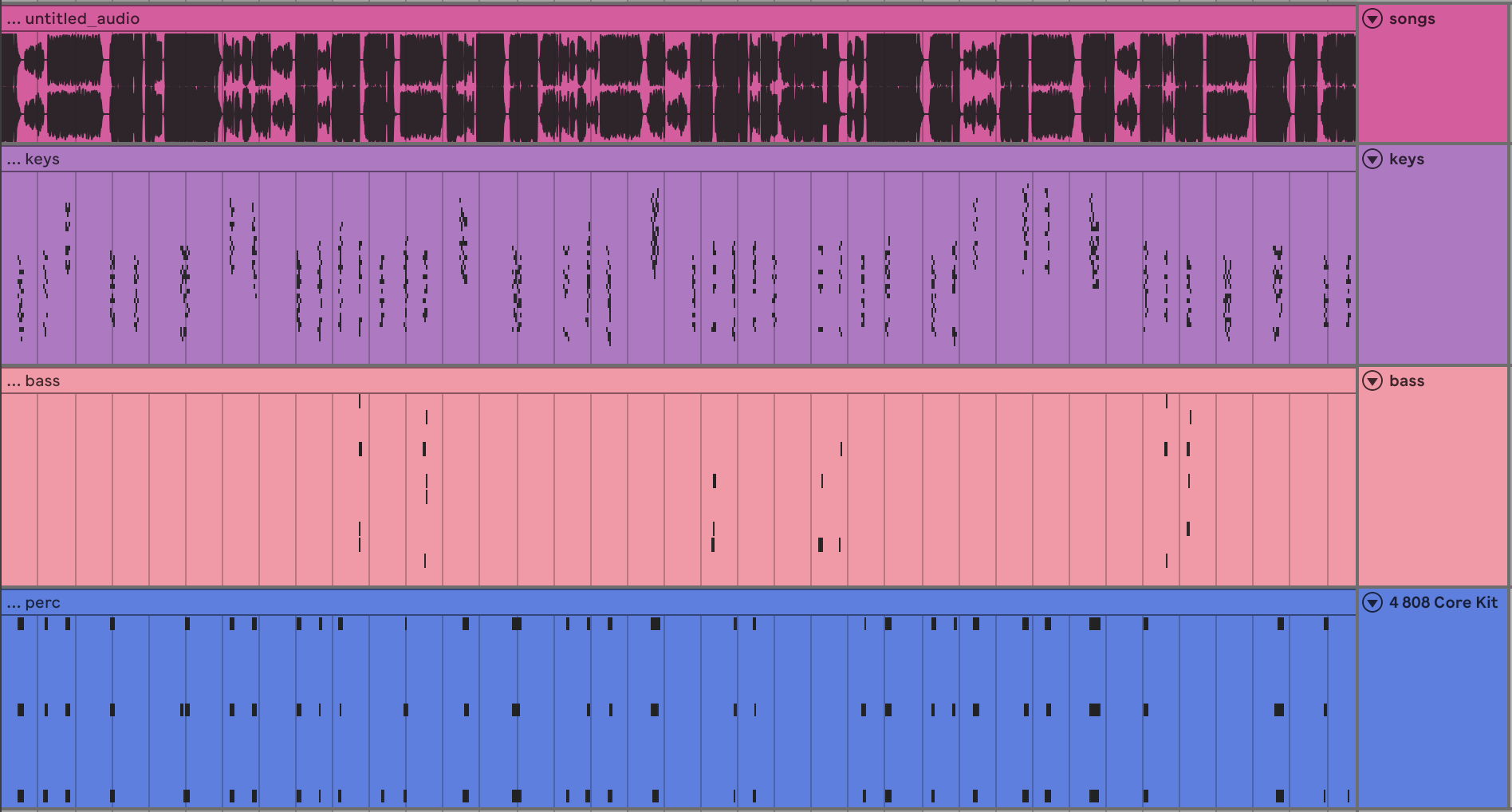
I was given a variety of genres, including ambient, classical, and experimental. It had to be flexible enough to adapt to almost any album's structure. I developed it with an Aphex Twin album, about as unpredictable as beat and chord analysis gets, to make sure the system still held up outside of anything conventionally structured.